
Letter revoking a VAT option to tax
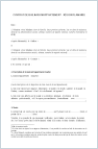
If you exercise the option to tax a commercial property for VAT purposes it is irrevocable except in a few situations. If you do want to revoke the option, use our letter to help ensure that you send the correct documents and information to HMRC so that it is effective.
About the letter
Once made there are only three situations where you can revoke an option to tax:
- by notification within six months of the option being made (a cooling-off period)
- automatically six years after the interest in the land or building has been disposed of
- by notification where more than 20 years have elapsed since the option was made, and certain conditions are met.
Revocation is subject to conditions which are detailed in HMRC’s VAT Notice 742A (http://tinyurl.com/k5azk4p).
To revoke under either the first or third option, you need to complete the appropriate form - VAT1614C or VAT1614J respectively; however, we also recommend sending a covering letter with the form.
How to use
Use our Revoking Option to Tax Letter to create a letter to accompany a notice VAT1614C or VAT 1614J. You will need to enter the date the option was made, and the details of the commercial property that was subject to the option. We have designed the letter so that you can use it to revoke an option to tax within the six-month cooling off period or after 20 years. Delete the section of the form which isn’t applicable.
Note. If you don’t complete and send a VAT1614C or VAT1614J, your revocation won’t be processed.
Related Topics
-
Deadline to pay Class 1B NI
-
Company owners' personal tax affairs under scrutiny
Company owners are being urged to check their personal tax affairs as a new compliance campaign focuses on transactions between limited companies and the people who control them. Loans, personal expenses and the use of company assets are among the areas attracting attention. Could you have overlooked a tax liability?
-
HMRC speeds up National Insurance refunds
HMRC has confirmed that it is using a new automated process to speed up National Insurance refunds. Where its records suggest that someone may have overpaid, HMRC will write to them asking them to check their employment and contribution details before any refund is processed. Could you be due money back?
 This website uses both its own and third-party cookies to analyze our services and navigation on our website in order to improve its contents (analytical purposes: measure visits and sources of web traffic). The legal basis is the consent of the user, except in the case of basic cookies, which are essential to navigate this website.